
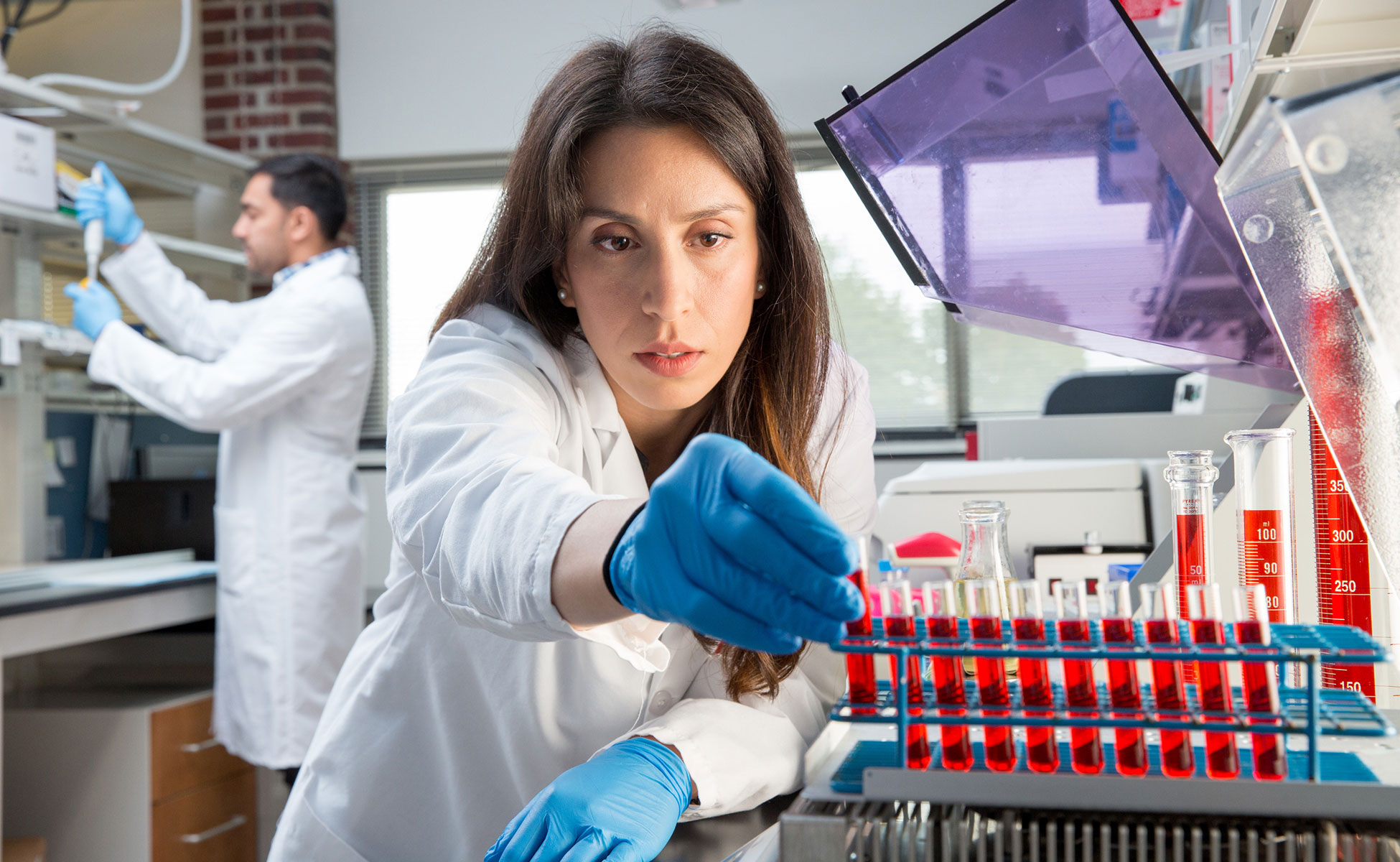
If you've graduated from college and have many of the outstanding traits that would make you a great dentist, but your academic record isn't yet strong enough to make you a competitive candidate when applying to dental school, then this program may be for you.
M.S.-D.D.S.: An Accelerated Master’s for Promising Dental Students
The Graduate School of Biomedical Sciences (GSBMS) has partnered with the Touro College of Dental Medicine (TCDM) to offer a one-year accelerated Master’s linkage program for a limited number of candidates. This selective program provides qualified candidates with conditional acceptance to TCDM’s four-year Doctor of Dental Surgery (D.D.S.) program.
The Dental Linker Program (DLP) is designed to strengthen your academic foundation and prepare you for the rigor of dental school. Through advanced science coursework, students engage in graduate-level study, including subjects such as dental physiology and microbiology, while gaining early exposure to the expectations of dental education.
In addition to academic preparation, the program emphasizes the development of effective learning strategies tailored to individual needs. Students build critical thinking, problem-solving, and self-directed learning skills essential for success in a dental curriculum.
Upon successful completion of the program and fulfillment of all academic requirements, students who meet the established benchmarks are eligible for linkage acceptance to the Touro College of Dental Medicine (TCDM).
“During my time in the Dental Linker Program, I delved deep into the intricacies of science, honing my skills and expanding my knowledge under the guidance of esteemed professors. Armed with this comprehensive education, I entered dental school with confidence, building upon the strong foundation laid during my master's studies.”
Sean Trzaska, D.D.S., '24,
TCDM Clinical Excellence and Professionalism Award Recipient
Program Curriculum
Curriculum Overview
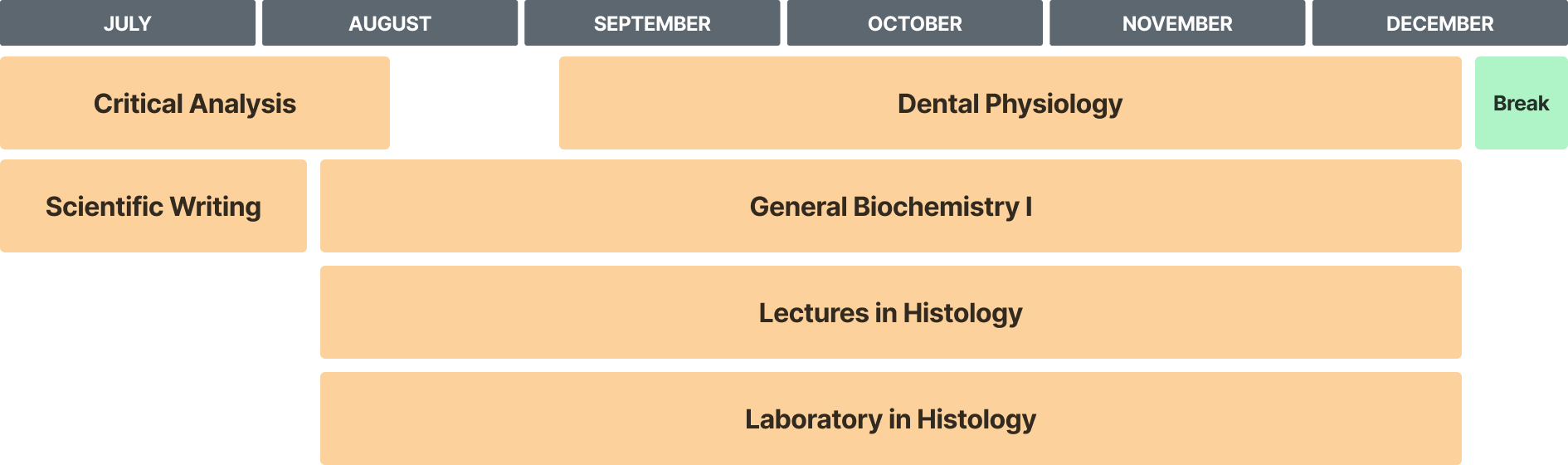
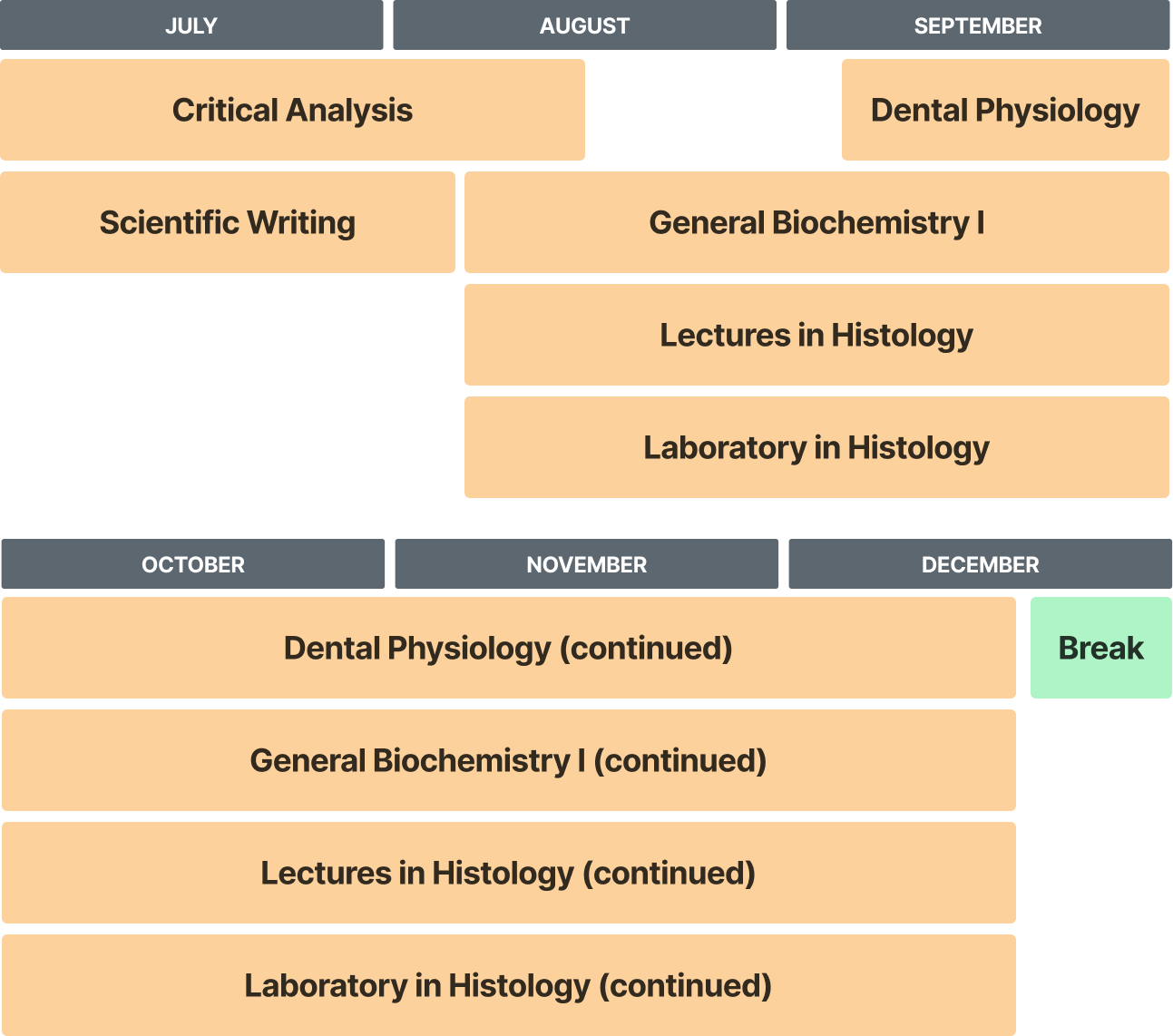
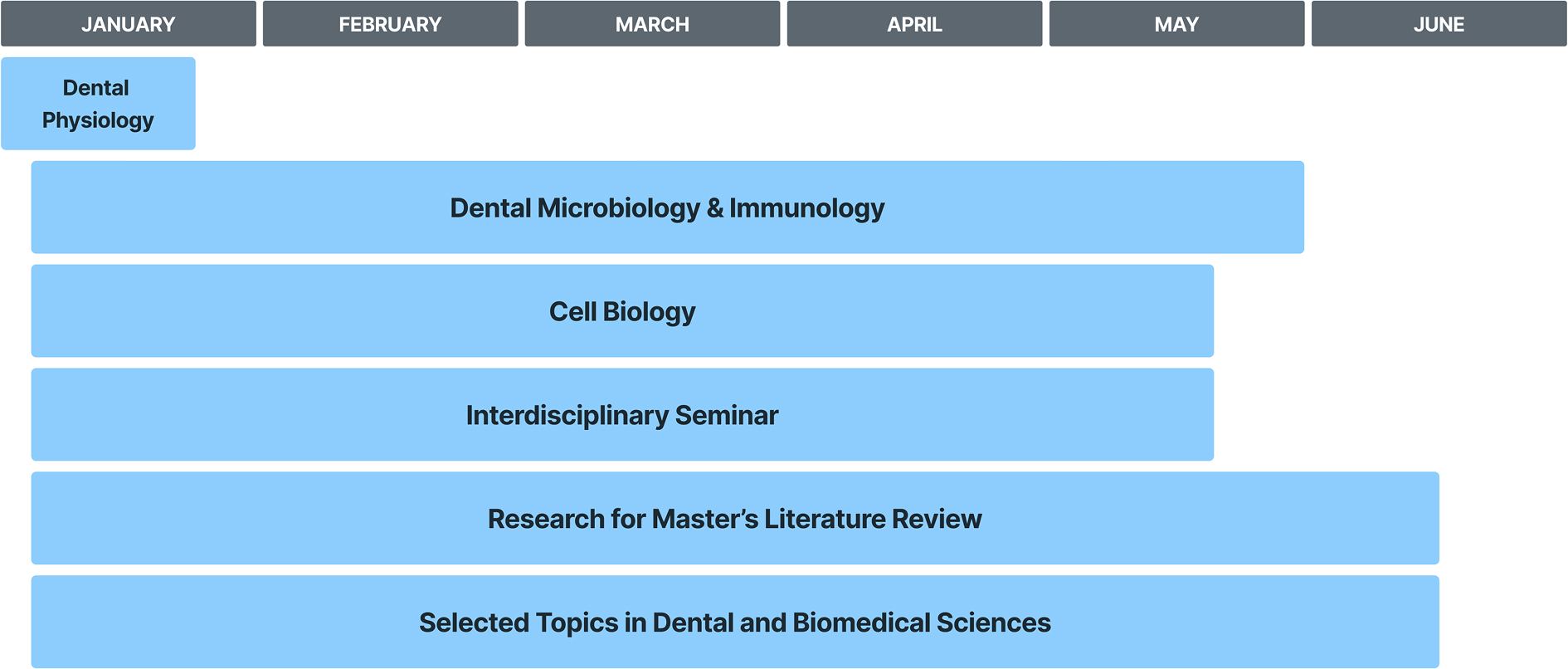
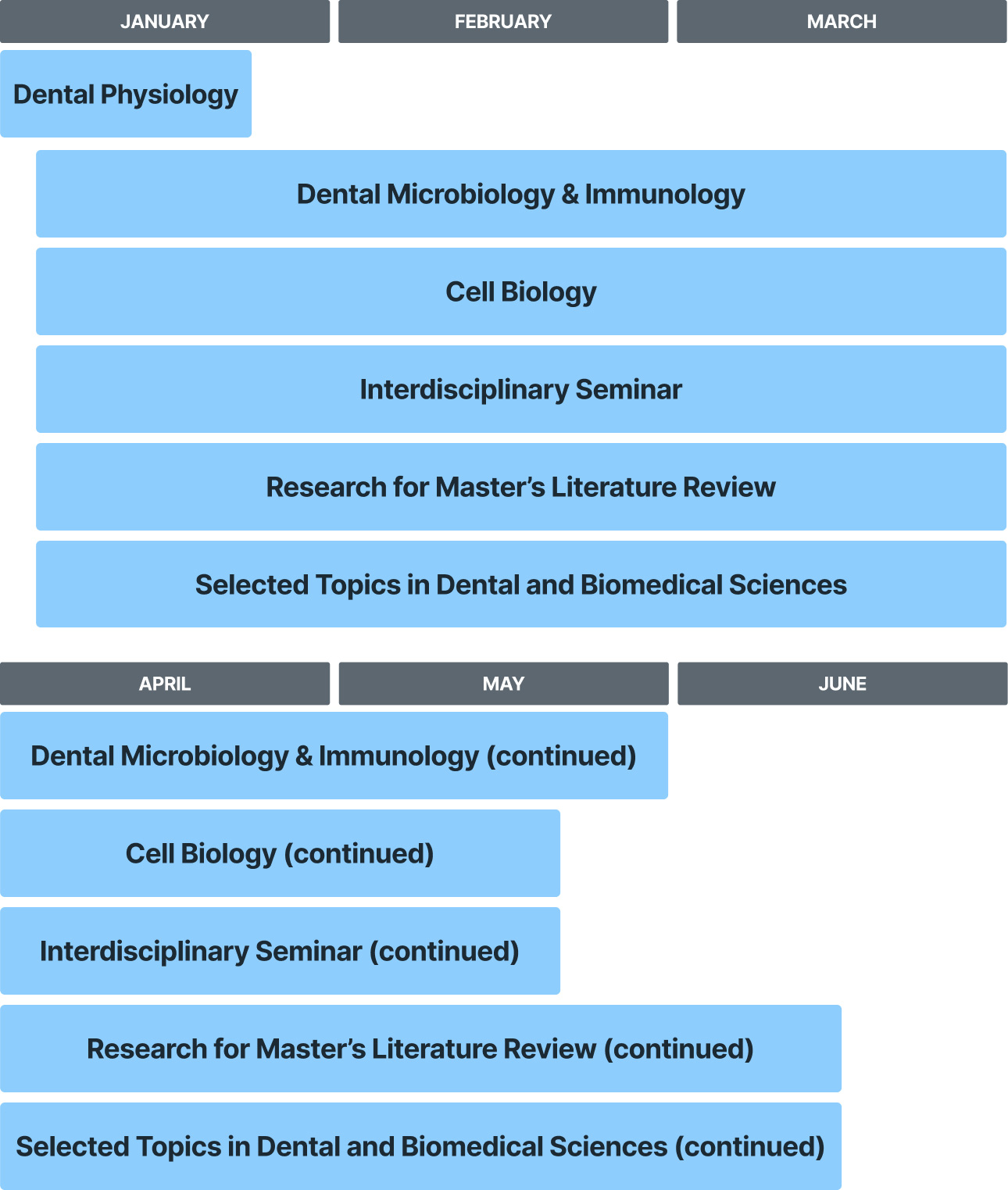
Chart Description
“Critical Analysis” begins in July and runs through the first half of August. “Scientific Writing” begins in July and runs through the first part of August. “General Biochemistry I” begins in the first part of August and runs through the first half of December. “Lectures in Histology” begins in the first part of August and runs through the first half of December. “Laboratory in Histology” begins in the first part of August and runs through the first half of December. “Dental Physiology” begins in the first part of September and runs through the first half of December. Break occurs for the second half of December. “Dental Physiology” begins again in January and runs for two-thirds of the month. “Dental Microbiology & Immunology” begins in the first part of January and runs until the end of May. “Cell Biology” begins in the first part of January and runs until three-quarters through May. “Interdisciplinary Seminar” begins in the first part of January and runs until three-quarters through May. “Research for Master’s Literature Review” begins in the first part of January and runs through mid-June. “Selected Topics in Dental and Biomedical Sciences” begins in the first part of January and runs through mid-June.
Fall (July - December)
BMSM 8041 Critical Analysis (1 credit)
This course introduces students to the process for reviewing literature and critiquing published scientific articles and their related data. A theme that reinforces biochemical, cell biological, or physiological principles taught earlier in the curriculum will be chosen as the foundational topic area.
BMSM 8030 Strategies for Effective Scientific Writing (1 credit)
Writing is an essential part of any scientist’s professional life. This activity ranges from the writing of letters to preparation of sophisticated technical reports. The aim of this course is to impart strategies to enable effective writing for the biological sciences.
PHYM 1310 Dental Physiology (7 credits)
This course explores how the major organ systems function and how they are interrelated. There is a strong emphasis on integrating the basic physiology with dentistry.
BCHM 1010 General Biochemistry I (4 credits)
This course is designed to present a thorough background of structural biochemistry, molecular biology and metabolism. Topics introduced include, not limited to, foundational principles of biochemistry, protein, lipid, carbohydrate, and nucleotide structure, enzyme kinetics, membranes and signaling, DNA repair and gene expression, carbohydrate, lipid, protein, and purine/pyrimidine metabolism, and the diverse biochemical functions of vitamins.
CBAM 1320 Lectures in Histology (3 credits)
Histology is the study at the microscopic level of the organization of cells in tissues and organs. This organization sets up the foundational principles underlying normal physiology and, from a clinical perspective, why alterations may lead to known pathologies. One goal is for students to appreciate why the spatial arrangement of tissues with organs elaborates physiologic function. During the course, the focus will be on the arrangement of tissues within various physiological systems, including cardiovascular, respiratory, gastroenterology, urinary, reproductive, endocrine, and sensory. Throughout students will be introduced to a variety of microscopic techniques, including light and electron microscopy and immunohistochemistry and immunofluorescence microscopy.
CBAM 1330 Laboratory in Histology (2 credits)
Laboratory sessions involve microscopic analysis of slides consisting of human and animal tissues and organs. Students will study tissue sections using microscopes and slides and will lead overview discussions prior to each laboratory session. Laboratory practical exams test knowledge of structural features of tissues and organs, and integrate functional and ultrastructural characteristics that are introduced in CBAM 1320.
Spring (January - June)
MCRM 1310 Dental Microbiology & Immunology (4 credits)
This course will present a substantial core of information essential for understanding the functioning of the human immune system and an acquaintance with the many microbial diseases encountered by dental professionals. The course will include an overview of the immune system, general microbiology, the molecular genetics of oral microbes, the pathogenesis of human microbial diseases, the appropriate use of antibiotics and antiviral agents, and current utilization of diagnostic microbiology and various laboratory methods.
CBAM 1360 Cell Biology (3 credits)
This course focuses primarily on eukaryotic cells. Lectures are devoted to structural details and the molecular functions of the different parts of the cell. Lectures will introduce topics such as endocytosis, intra-membrane transport, protein targeting, organelle biosynthesis, protein sorting, exocytosis, cell shape, motility, and cell-to-cell interaction. Lectures also deal with signal transduction processes and cellular functions that are required for cell growth and programmed cell death. By its completion, students should have a comprehensive understanding of the architecture and function of living cells. In addition, emphasis is placed on experimental approaches taken to elucidate certain biology principles, including “paper sessions” with active participation by students.
BMSM 7104 Selected Topics in Dental and Biomedical Sciences (3 credits)
Proficiency in interpretation of primary literature and effective communication skills are necessary skills for individuals engaged in the scientific and health professions. Aligned with the format of other 7100-series courses, the present course affords DLP students the opportunity to cultivate expertise in comprehending reading scientific articles and honing their communication skills, both oral and written among their peers. More notably, this course distinguishes itself within the 7100-series by encompassing three distinct mini-topic areas.
BMSM 8042 Interdisciplinary Seminar (1 credit)
Attending seminars beyond a student’s area of expertise is a wonderful approach to learn topics peripheral to one’s interests. Each department (Basic Sciences and Clinical Sciences) offers a seminar series that often blends together an overview of a topic to a general audience with specific focuses. Students enrolled in this course will be required to attend up to 6 departmental seminars (hosted by basic or clinical departments) or plenary keynote addresses at various student research forums and submit a synopsis and commentary of the talk, highlighting specific aspects identified in the course guidelines. The commentary should be in a format similar to those found in major peer-reviewed journals that publish commentaries or editorial essays and should help a reader understand the topics that were discussed in the seminar. The student will be encouraged to include background information from the literature, allowing them to be familiar with the field and to include their own critiques or editorial comments. The synopsis should include alternative explanations to those presented at the seminar.
BMSM 9701 Research for Master’s Literature Review (1 credit)
This course reflects the library research that students undertake, under the supervision of a faculty advisor, in preparation for their M.S. Literature Review. Students enrolled in BMSM 9701 must provide their faculty advisor with frequent and regular evidence of their progress, and with progressive drafts of the literature review itself according to a pre-arranged schedule. Independent study.
BMSM 9750 Master’s Literature Review (0 credits)
This course is entered on the student’s transcript when the Master’s Literature Review is approved by the faculty review committee and submitted in final form to the Graduate School.
Admission into the Program
Eligible candidates may apply directly to the program or may be identified by the TCDM Admissions Committee during the dental school admissions process. All applicants must demonstrate strong potential to succeed in dental school but would benefit from additional upper-level science coursework to strengthen their academic preparation.
If you have already applied to TCDM and currently have a pending application, please do not apply directly to the DLP program. If appropriate, during the review of your application, TCDM may refer it to the Graduate School for consideration.
Admissions Criteria
To apply you will need:
- A baccalaureate or higher degree in the sciences (biology, chemistry, or the physical sciences), prior to the start of the program, from an accredited U.S. college or university or from a recognized foreign institution.
- Overall undergraduate GPA of 3.0, including a 3.0 GPA in math and science courses.
- Undergraduate pre-dental course requirements taken prior to enrollment in the iBMS Dental Linker program:
- General Biology with lab - two (2) semesters or equivalent, with labs
- General Chemistry with lab - two (2) semesters or equivalent, with labs
- Organic Chemistry with lab - one (1) semester or equivalent, with lab
- Biochemistry - one (1) semester with or without lab
- Physics - two (2) semesters or equivalent, with labs
- English - two (2) semesters (or equivalent or successful completion of the English requirement(s) at your undergraduate institution)
- A CV/resume.
- A minimum total DAT score of 400.
- Clinical/research experience.
- Letters of recommendation: you will need to include one (1) Pre–Dental Committee letter of evaluation OR three (3) letters of evaluation from undergraduate faculty.
- If you opt for the three letters of evaluation from undergraduate faculty, two (2) letters must be from science faculty who taught the applicant or supervised independent research for credit. Acceptable science courses include: biology, chemistry, physics, biomedical engineering, or bio-engineering, etc. (Math is not considered a science course for purposes of letters of evaluation.) The third letter of evaluation can be from a non-science course or volunteer work done in a dental office/clinic. One (1) of the letters of evaluation must be from the applicant’s major.
- If your date of graduation is prior to 2024 (this does not include 2024), and you are unable to obtain letters of evaluation from your undergraduate or graduate school, we will accept other academically oriented letters. However, keep in mind providing us with the requested letters will strengthen your application.
An interview is part of the admissions process.
If you are not referred to the DLP program by the Touro College of Dental Medicine, you may apply directly to the program through Touro's Online Application System. Applications are reviewed once all required materials have been received and the application is complete.
Contact
-600x600.jpg)
