
Contact
- elizabeth_berry@nymc.edu
- (914) 594-4038
- Basic Science Building
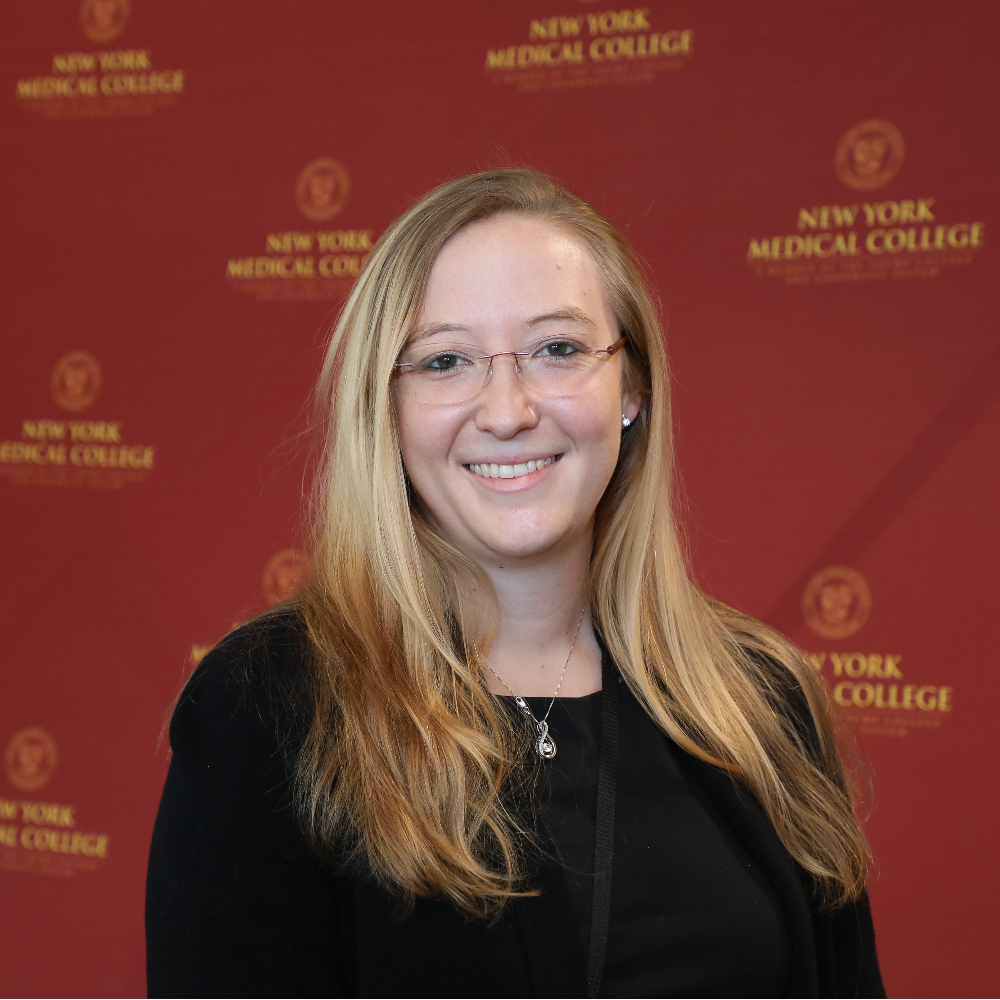
Elizabeth Berry, Ph.D. '23, is a neuroscientist and educator dedicated to bridging the gap between high-level research and student success. She completed her doctoral work at New York Medical College in the lab of Christopher Leonard, Ph.D., where her research investigated how opioid addiction alters the intrinsic electrical properties of orexin neurons in the hypothalamus. By exploring how drugs of abuse reshape the brain’s reward system, her work helps pave the way for the development of novel therapeutics.
Driven by a passion for clear science communication, Dr. Berry is a member of the 2025-2026 NYMC Academy of Medical Educators. She is committed to utilizing evidence-based teaching strategies to help students navigate complex physiological concepts and reach their full potential as future health care professionals.
Education
- Ph.D., Cell Biology and Anatomy, New York Medical College
- B.S., Cell and Molecular Biology, University of Rhode Island
- B.S., Biological Science, University of Rhode Island
Areas of Expertise
- Biochemistry
- Neuroscience
Research
- Addiction
- Neurodegeneration
- Sleep Physiology
Publications
- Berry EA, Huhulea EN, Ishibashi M, et. al. "Repeated Morphine Exposure Reversibly Impairs Spike Generation and Repetitive Firing in a Functionally Distinct Subpopulation of Orexin Neurons." The Journal of neuroscience : the official journal of the Society for Neuroscience, 45(49), (2025) . doi: 10.1523/JNEUROSCI.0563-25.2025
- Berry EA, Huhulea EN, Ishibashi M, et. al. "Chronic but not acute morphine exposure reversibly impairs spike generation and repetitive firing in a functionally distinct subpopulation of orexin neurons." bioRxiv : the preprint server for biology, (), (2025) . pii: 2025.03.20.644444. doi: 10.1101/2025.03.20.644444
- Azcona JA, Tang S, Berry E, et. al. "Neutrophil-Derived Myeloperoxidase and Hypochlorous Acid Critically Contribute to 20-Hydroxyeicosatetraenoic Acid Increases that Drive Postischemic Angiogenesis." The Journal of pharmacology and experimental therapeutics, 381(3), (2022) 204-216. doi: 10.1124/jpet.121.001036
- Ni P, Noh H, Shao Z, et. al. "Large-Scale Generation and Characterization of Homogeneous Populations of Migratory Cortical Interneurons from Human Pluripotent Stem Cells." Molecular therapy. Methods & clinical development, 13(), (2019) 414-430. doi: 10.1016/j.omtm.2019.04.002
- Berry E, Liu Y, Chen L, et. al. "Eicosanoids: Emerging contributors in stem cell-mediated wound healing." Prostaglandins & other lipid mediators, 132(), (2017) 17-24. doi: 10.1016/j.prostaglandins.2016.11.001
Teaching Responsibilities
School of Medicine:
- Module 1
- Module 2
Graduate School of Biomedical Science:
- Biochemistry 1010
- Biochemistry 1020
